Winning team chosen from shortlist of 12 architects for landmark scientific facility.
Sordo Madaleno with építész stúdió and Buro Happold have been selected to design the 43,000 sqm New Debrecen Collection Centre of the Hungarian Museum of Natural History. Appointed from a shortlist of 12 architects, this marks the first European cultural project for the third-generation Mexican architecture practice, which operates studios between London and Mexico City.
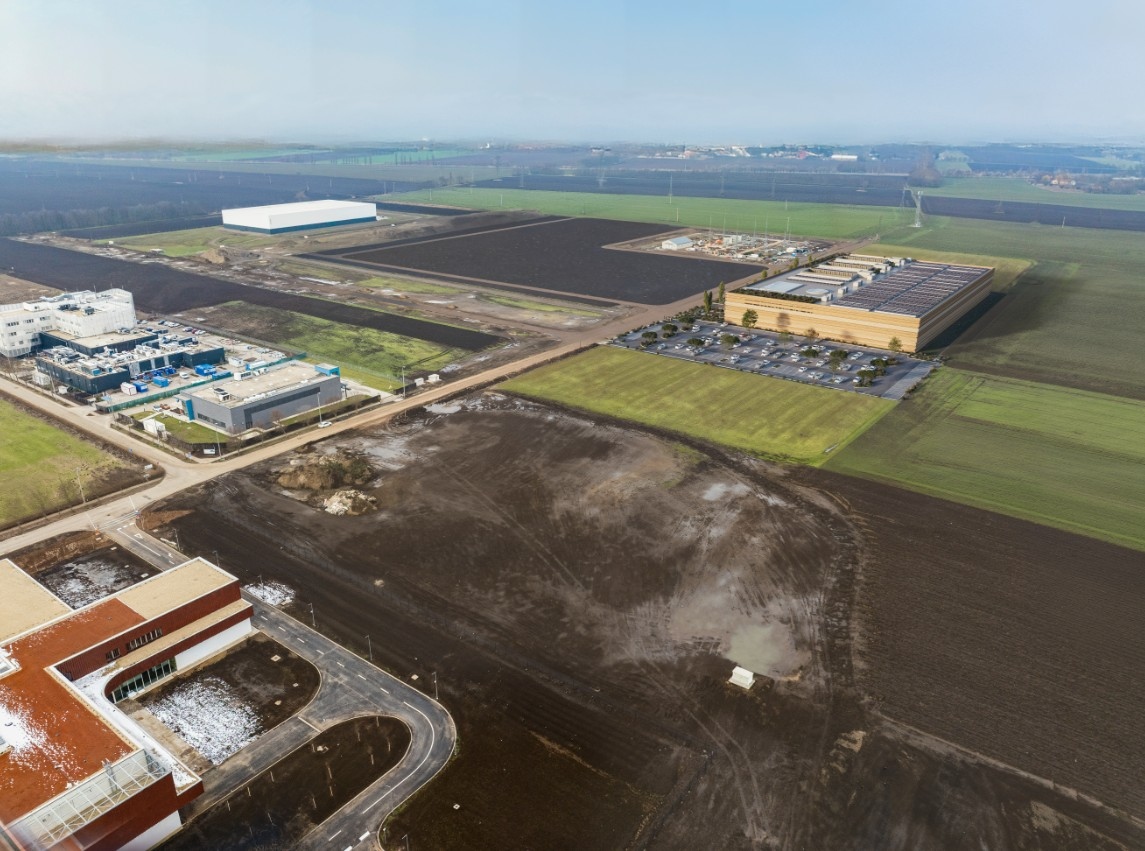
Debrecen, the second largest city in Hungary, is the focus of major urban and university infrastructure development that includes the relocation of the Hungarian Museum of Natural History from Budapest to the edge of Debrecen's Great Forest. The Museum’s New Collection Centre by Sordo Madaleno with építész stúdió and Buro Happold is focussed on the controlled storage and study of over 11 million objects and its site lies within the University of Debrecen Science Park about 4km from the new Natural History Museum building.
Architectural concept - Building as Vessel
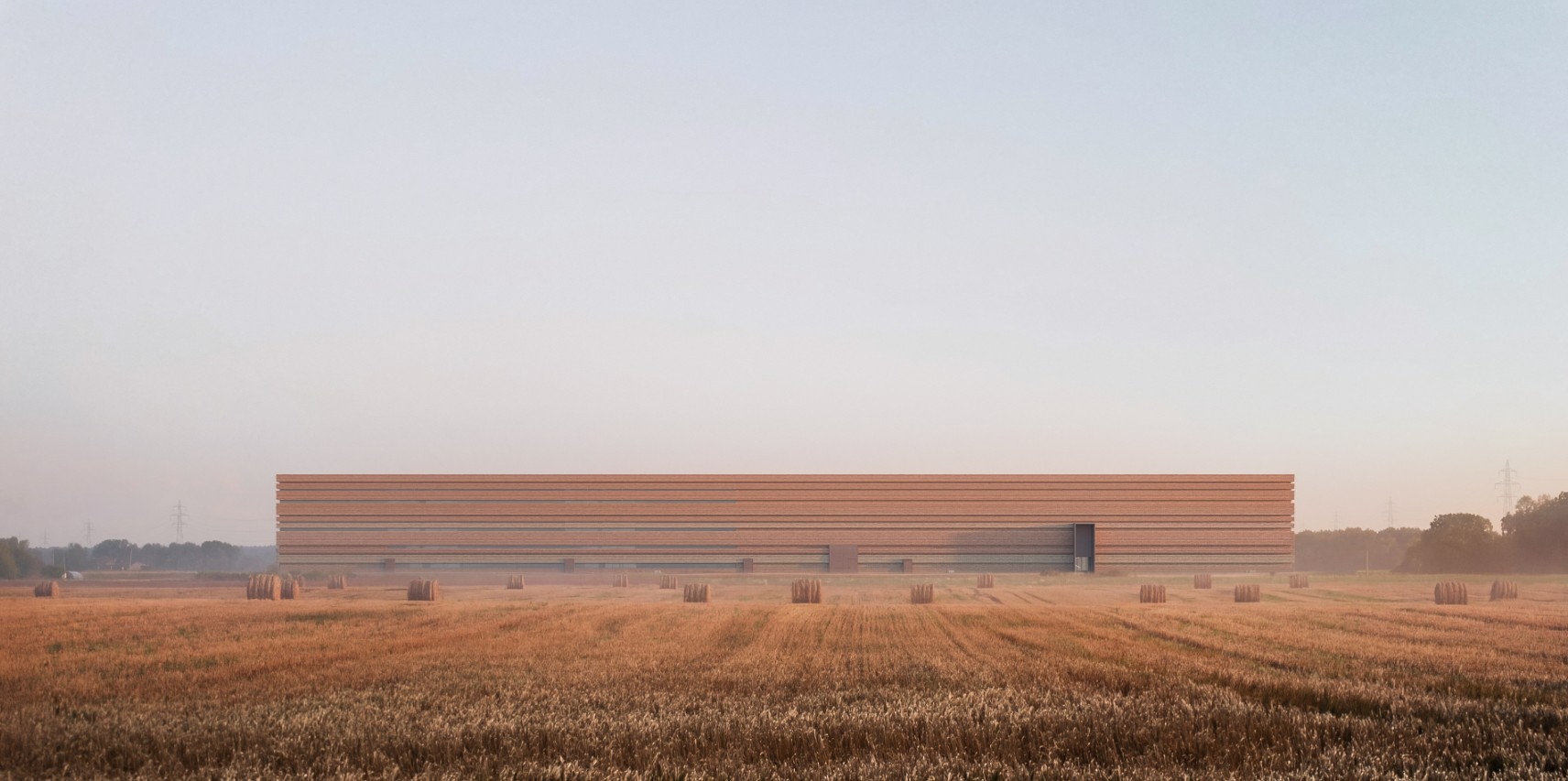
The New Debrecen Collection Centre follows the simple logic and elegant utility of the traditional Hungarian clay vessel: a building intended to protect and incubate. Drawing from the design team’s research into the region's craft traditions and material histories—where clay vessels and earthenware have long been used for conserving produce— the 141m by 83m elongated rectilinear building reads as a solid, elemental and timeless design.
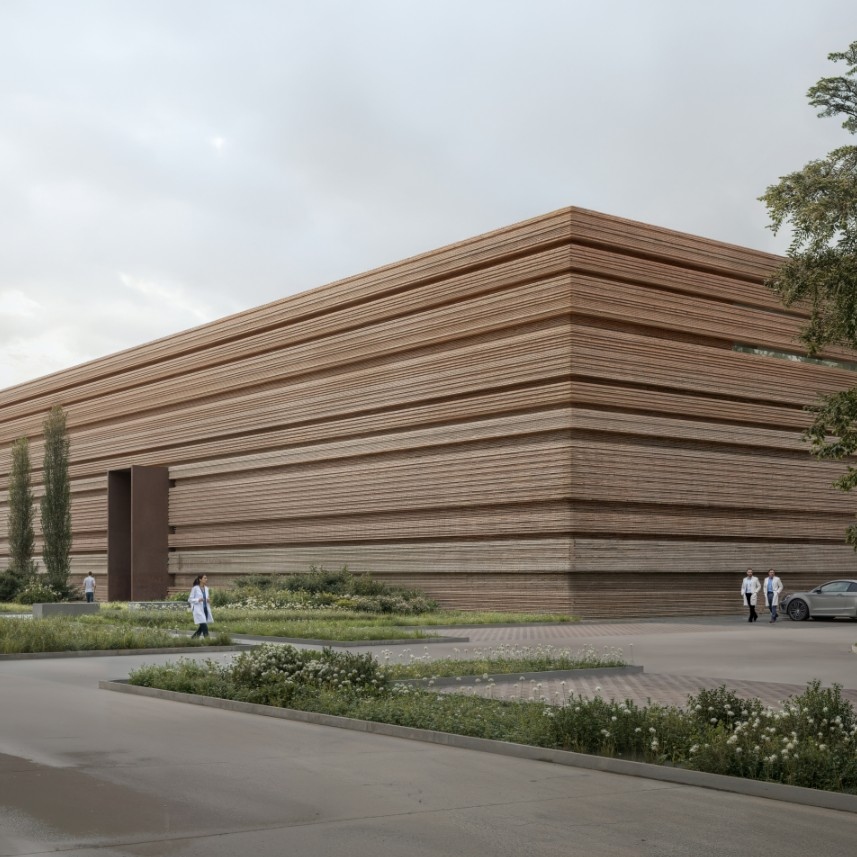
The Centre is optimized for controlled storage, efficient research operations, and the long-term production and preservation of knowledge. The centre's defining feature is its stratified brick façade referencing Hungary's geological and material history with the soils used for the manufacturing its bricks originating from different regions of the country. The brick tones, too, create a material representation of the Collection Centre's disciplines - geology, fossils, animal life, human activity, and ecology - and its mission to understand the bio- and geodiversity of not only the Carpathian Basin but also the entire earth. These subtle variations enliven the building's monolithic form which extends the surrounding landscape with its low-lying fields and wide horizons. A discrete arrival point reinforces the notion of a building designed for security, collections care, and conservation.
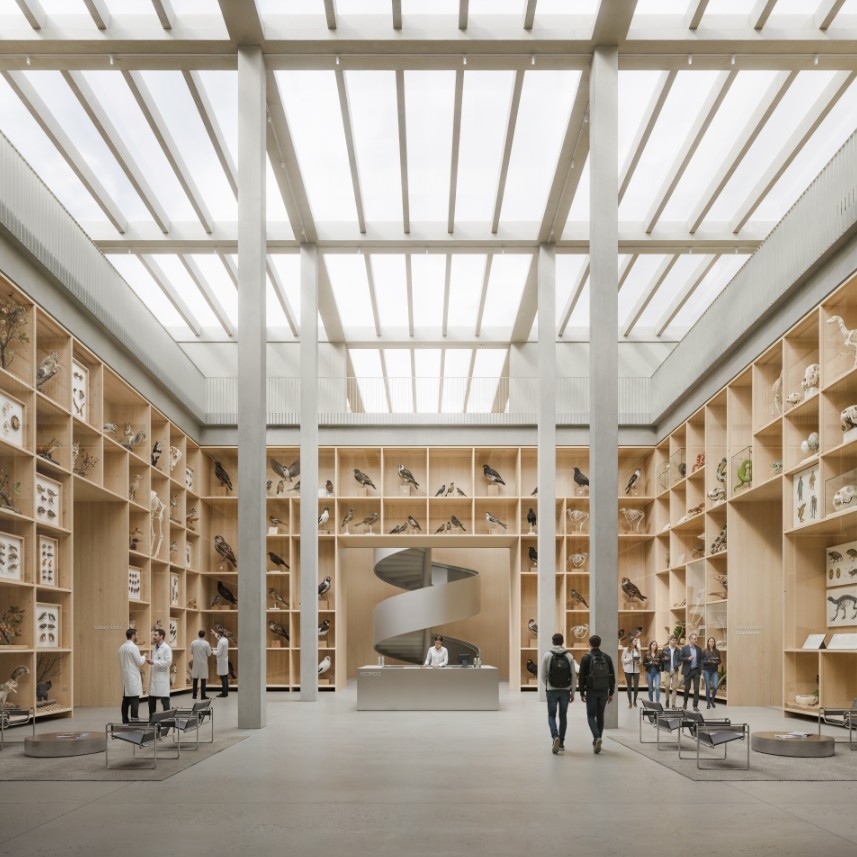
The plan is radically lucid, ensuring optimal environmental and technical performance. There are three key areas over three floors and a basement level. These are divided into 28,000 sqm of storage for the archive, 6,000 sqm of study spaces including conservation laboratories, and a welcoming triple-height atrium for visiting student groups and research professionals. Within the top-lit atrium, selected items from the Museum's collection are displayed, creating an exhibitions and gallery space with adjoining lecture halls that can also be used for events. This makes it an ideal public offering for researchers, students, and educational groups. Within the study and laboratory areas most used by staff day-to-day, controlled light and ventilation is introduced through internal courtyards, thereby ensuring workspace comfort with generous views outdoors and without compromising on the rigorous museum-standard conservation requirements.
“The Centre’s staff are stewards of the objects, and the architecture becomes an extension of that stewardship. Within this layered ecology of care, the object is framed not as an isolated artefact but as an embodiment of life-worlds and landscapes that nourish reciprocal relationships. Our building reflects this mutuality, providing a space of unity between conservator, stakeholder, architecture, and environment” — described Fernando Sordo.
Project Team:
Sordo Madaleno: Javier Sordo Madaleno Bringas, Javier Sordo Madaleno de Haro, Fernando Sordo Madaleno, Tamara Munoz, Jaime Sol, Carlos Reyes, Rick Liu, Audrey Tseng de Melo Fischer, Juliana Biancardin, Marissa Glauberman, Castana Arango, Ann Dingli, Luis Frausto, Diego Velazquez, Aaron Sanchez
építész stúdió: Honich Richard, Szántó Hunor
Buro Happold: Thomas Kirchner, Neil Francis, Tom Headley, Nick Greenwood, Nicholas Trowles
CGI: BsArq